

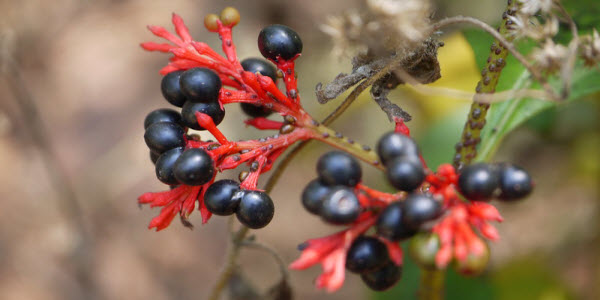
A cropped version of the image Chandra by Dinesh Valke. Used under creative commons license.

Chestnuts by Peter Burka. Used under creative commons license.

Autumn crocus! by Sylvia Sassen. Used under creative commons license.

Exodus by Giorgio Raffaelli. Used under creative commons license.

Granted Audience with Cleopatra and Bastet by Stella Splendid. Used under Creative Commons license.

Coral Reef, taken by Susan Hazlett, USGS. Public domain.

IMG_20161015_161456 by Julie Freeman. Used under Creative Commons license

Chili pepper by hepp. Used under creative commons license
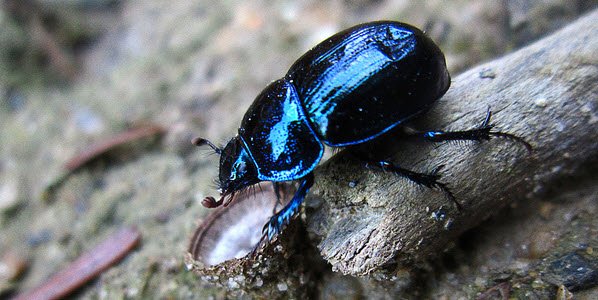
Empty? by Arkadiusz R. Used under creative common license

Polar bear by Leszek.Leszczynski. Used under creative commons license.
MetaCyc Metabolic Pathway Database
MetaCyc is a curated database of experimentally elucidated metabolic pathways from all domains of life.
MetaCyc contains pathways involved in both primary and secondary metabolism, as well as associated metabolites, reactions, enzymes, and genes. The goal of MetaCyc is to catalog the universe of metabolism by storing a representative sample of each experimentally elucidated pathway.
MetaCyc currently contains 3,284 pathways, 20,199 reactions, and 20,642 metabolites.
MetaCyc applications include:
- Online encyclopedia of metabolism
- Predict metabolic pathways in sequenced genomes
- Support metabolic engineering via enzyme database
- Metabolite database aids metabolomics research
What people are saying...







Learning Library
Tutorial Videos
Tutorial #1: Introduction to BioCyc
Tutorial #2: Introduction to SmartTables
Tutorial #3: Zoomable Metabolic Map, Comparative Tools, Regulatory Network
Tutorial #4: Omics Data Analysis
Tutorial #5: Pathway Collages
Tutorial #6: Creating a Pathway/Genome Database
- Part 1A: Introduction to Database Building and Pathologic (14:04)
- Part 1B: Building a Database: Detailed Pathologic Example (23:53)
- Part 2A: General Editing Strategies (8:00)
- Part 2B: Creating and Editing Reactions and Compounds (17:32)
- Part 2C: Updating Proteins, Citations, GO Terms, and Enzymatic Reactions (26:10)
- Part 2D: Making and Editing Pathways (9:42)